What are soft stone wall panels and what are their materials?
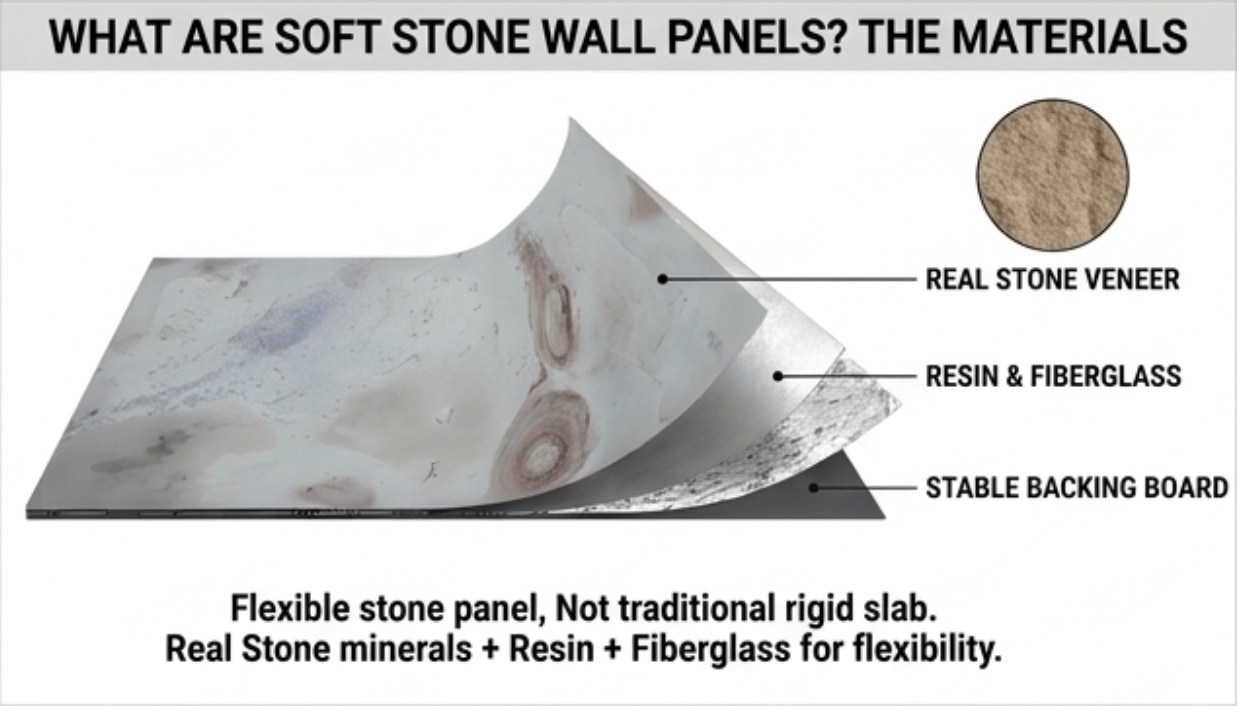
A flexible wall panel is a revolutionary product in the modern renovation market. It is not a traditional rigid slab. Instead, it is a Bendable stone panel made from high-tech materials. The surface consists of Real Stone Veneer, giving it an authentic look and feel.
Manufacturers blend this veneer with high-quality Resin and Fiberglass. These layers provide the necessary strength and flexibility. Finally, a stable Backing Board allows for easy application on various surfaces. Designers often call these Modified clay materials because of their unique composition. This combination makes the soft tone of natural stone accessible for complex architectural shapes.
Main features and advantages and disadvantages
This soft stone wall panel offers several unique benefits for home improvement projects. It handles extreme weather conditions without losing its beauty.
Lightweight Nature: It weighs significantly less than traditional stone slabs.
Extreme Flexibility: You can wrap these panels around columns easily.
Weather Resistance: They resist UV rays, rain, and freezing temperatures.
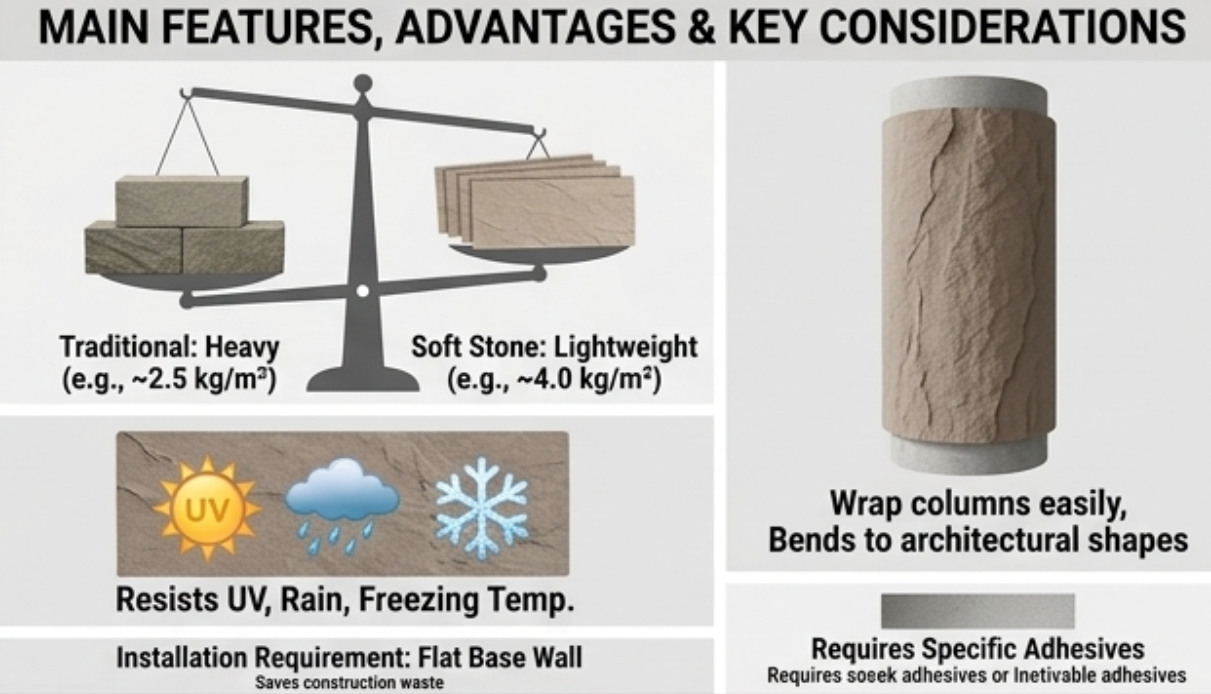
However, these panels have some requirements. You must ensure the base wall is perfectly flat. The installation requires specific adhesives to ensure a long-lasting bond. Despite these small needs, a Soft stone veneer remains a top choice for luxury projects.
PU Stone Panels VS Flexible Stone Tiles
Choosing the right material for your wall panel project is vital. Many people compare PU (Polyurethane) stone with flexible stone. While both are popular, they serve different functional needs. PU stone is an imitation. Flexible stone uses real stone minerals.
The following table shows the technical differences based on industry standards:
|
Feature |
PU Stone Panels |
Flexible Stone Tiles |
|
Primary Material |
High-density Polyurethane |
Modified Clay & Stone Veneer |
|
Surface Texture |
Molded plastic feel |
Real natural stone texture |
|
Weight |
~2.5 kg/m² |
~4.0 kg/m² |
|
Fire Rating |
Typically B2 (Combustible) |
Class A (Non-combustible) |
|
UV Resistance |
Average (May fade) |
Excellent (Natural minerals) |
|
Service Life |
10 - 15 Years |
25 - 30 Years |
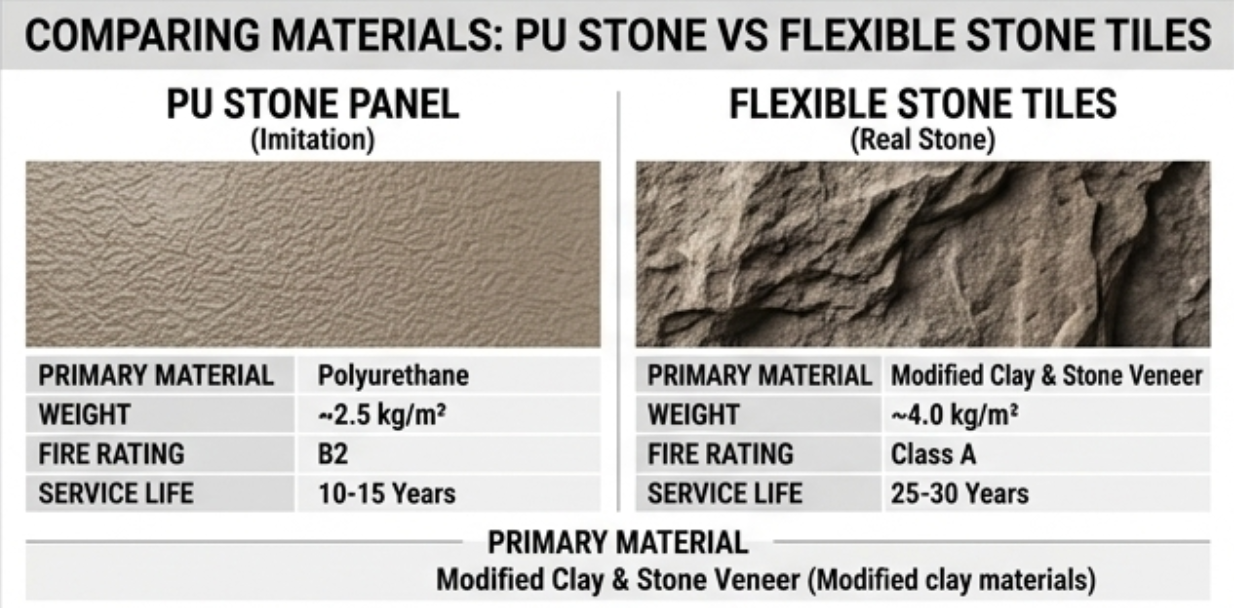
As shown, ZEENDECOR materials focus on longevity. A Flexible clay tile or Flexible granite tile provides a much more realistic finish. PU panels often look artificial up close. In contrast, flexible tiles offer the depth of a Flexible granite tile.
Important application areas
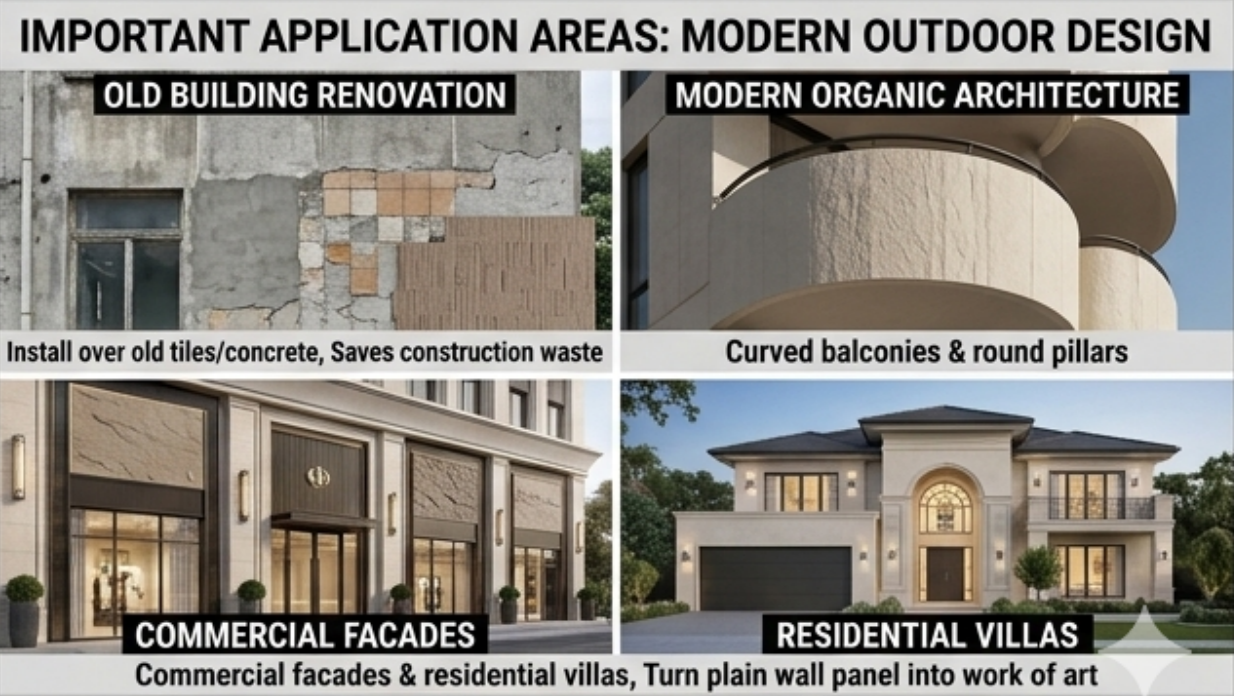
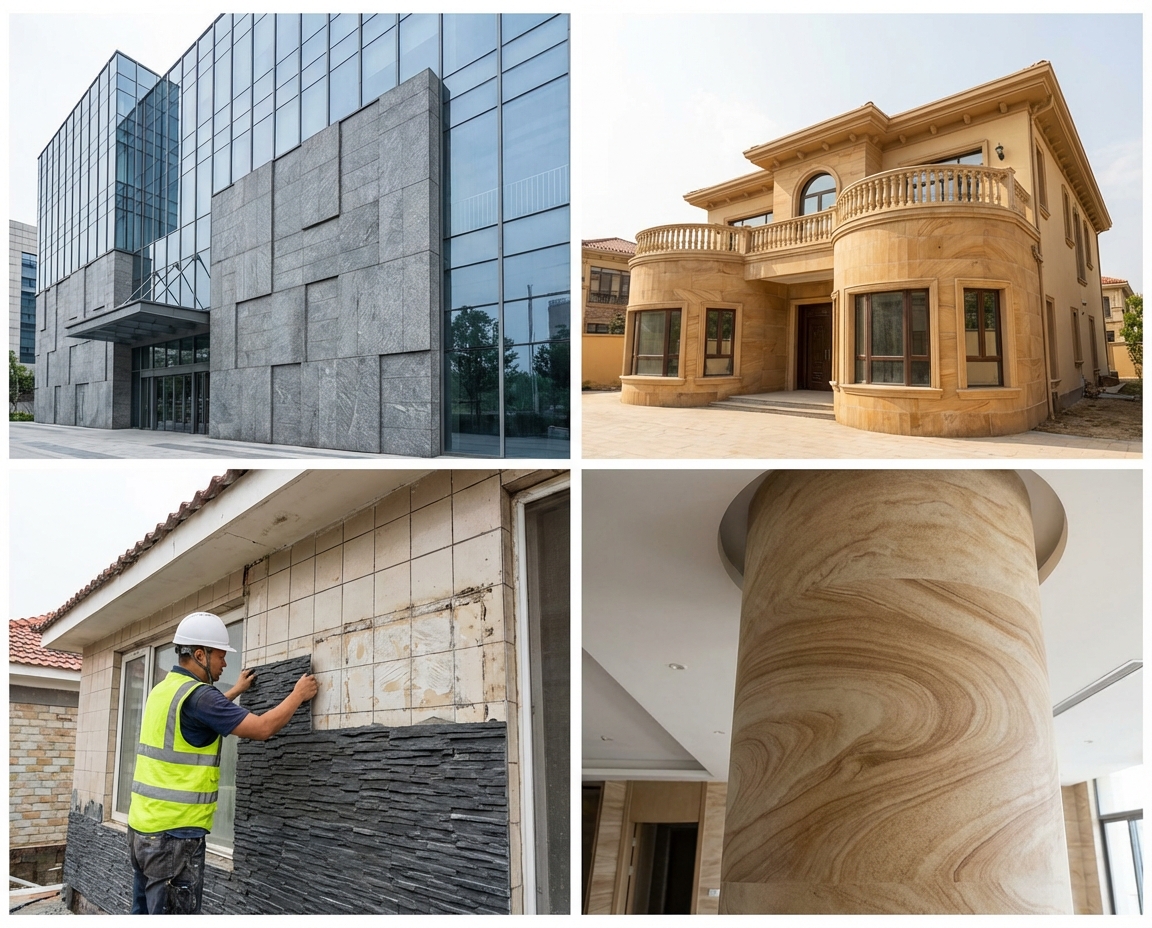
These panels excel in the renovation of old buildings. You can apply them directly over old tiles or concrete. This saves time and reduces construction waste. They are perfect for commercial facades and residential villas.
Irregular walls are no longer a problem for architects. You can use a Flexible wall tile to cover curved balconies or round pillars. Even flexible ceramic tiles cannot match this level of adaptability. These panels satisfy the needs of modern, organic architecture. They turn a plain wall panel into a work of art.